Buying Guide
Marble Salt Cellar Buying Guide
What to look for at the stove, and why cooks reach for a cellar instead of a shaker
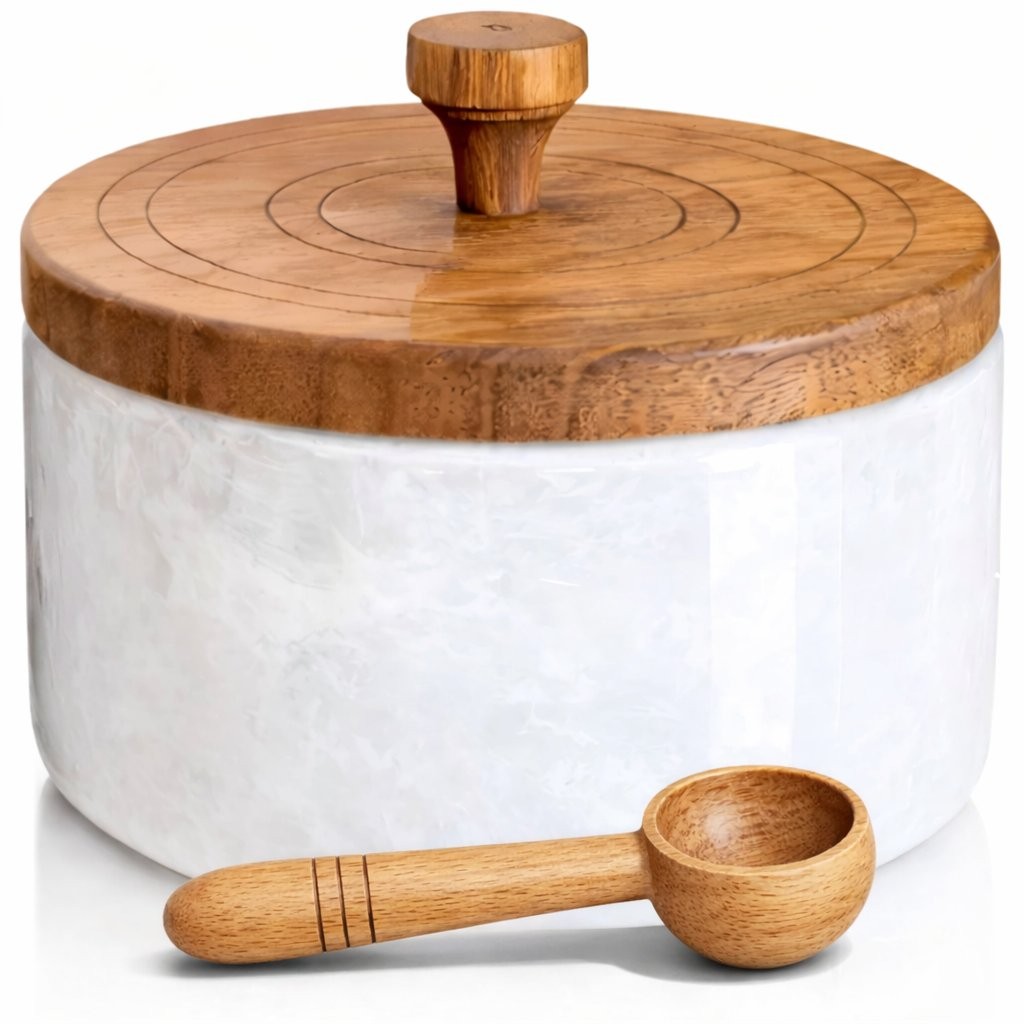
Professional cooks rarely reach for a shaker mid-recipe - they pinch from an open cellar instead. It is faster, gives more control over how much salt lands where, and a lidded marble version also keeps the salt itself dry between uses.
1. Why a cellar instead of a shaker
Pinching salt lets you feel the quantity and place it precisely - along the edge of a searing pan, across a cut of meat, or just a light finish at the end of plating. A shaker's even scatter cannot replicate that control, which is why a cellar is the standard tool in professional kitchens even though a shaker looks tidier.
2. Lid and spoon are worth having, not optional extras
An open bowl works, but coarse and flaky salts absorb kitchen humidity quickly and clump without a cover. A well-fitted lid keeps the salt loose and pinchable, and a small spoon included with the cellar means you are not reaching in with wet fingers when a recipe calls for a measured amount rather than a pinch.
What to check before buying:
Confirm the listing includes a lid and, ideally, a small spoon - some cellars are sold as an open bowl only, which is fine for dry climates but less practical in a humid kitchen.
3. What we build ours around
Our own Marble Salt Cellar is solid marble at 4 x 4 x 3 inches, with a wooden lid and spoon included, built for coarse and flaky salt at the stove. It is available in White, Black, Grey, or Red, and currently holds a 4.8 rating from 42 reviews. If you also want a matching pepper cellar, we sell the matched Salt & Pepper Cellar Set as a pair.
LaOnyx Marble Salt Cellar
Wooden lid & spoon included · White, Black, Grey, or Red · 4.8 (42 reviews)
View the Marble Salt Cellar4. Where it fits on your counter
A salt cellar belongs within reach of the stove, not tucked in a cabinet - see our kitchen styling guide for ideas on grouping it with a butter keeper or small tray for a cohesive counter setup.
5. Keeping it looking new
Wipe the marble base clean and dry, keep the lid on between uses, and avoid leaving the cellar near a wet sink edge. See our marble care guide for the full routine.
Frequently Asked Questions
What is a salt cellar for, and how is it different from a shaker?
A salt cellar is an open (or lidded) bowl you pinch salt from, rather than shaking it out through holes. Cooks prefer it at the stove because pinching lets you judge quantity by feel and season unevenly on purpose - over a pot edge, along a cut of meat - in a way a shaker cannot.
What kind of salt works best in a salt cellar?
Coarse, flaky, or kosher salt is the standard choice, since fine table salt tends to clump and is awkward to pinch. A lid helps either way by keeping the salt dry between uses, which matters most for coarse and flaky salts that clump quickly once exposed to kitchen humidity.
Salt cellar or a matched salt and pepper set - which should I get?
A single cellar is enough if you mainly season with salt at the stove. If you plate at the table and want both salt and pepper within reach in matching vessels, a set is the more consistent look and saves you buying a second piece separately later.
Does marble affect the salt stored in it?
No - salt is dry and non-reactive, so it will not etch or stain marble the way acidic liquids can. The main thing to manage is moisture: keep the lid on when not actively cooking so the salt does not clump from ambient humidity.
Ready to Season Like a Pro?
Shop the Marble Salt Cellar in White, Black, Grey, or Red
Shop Marble Salt Cellar