Buying Guide
Marble Rolling Pin Buying Guide
Why marble outperforms wood for pastry, and what actually matters when choosing one
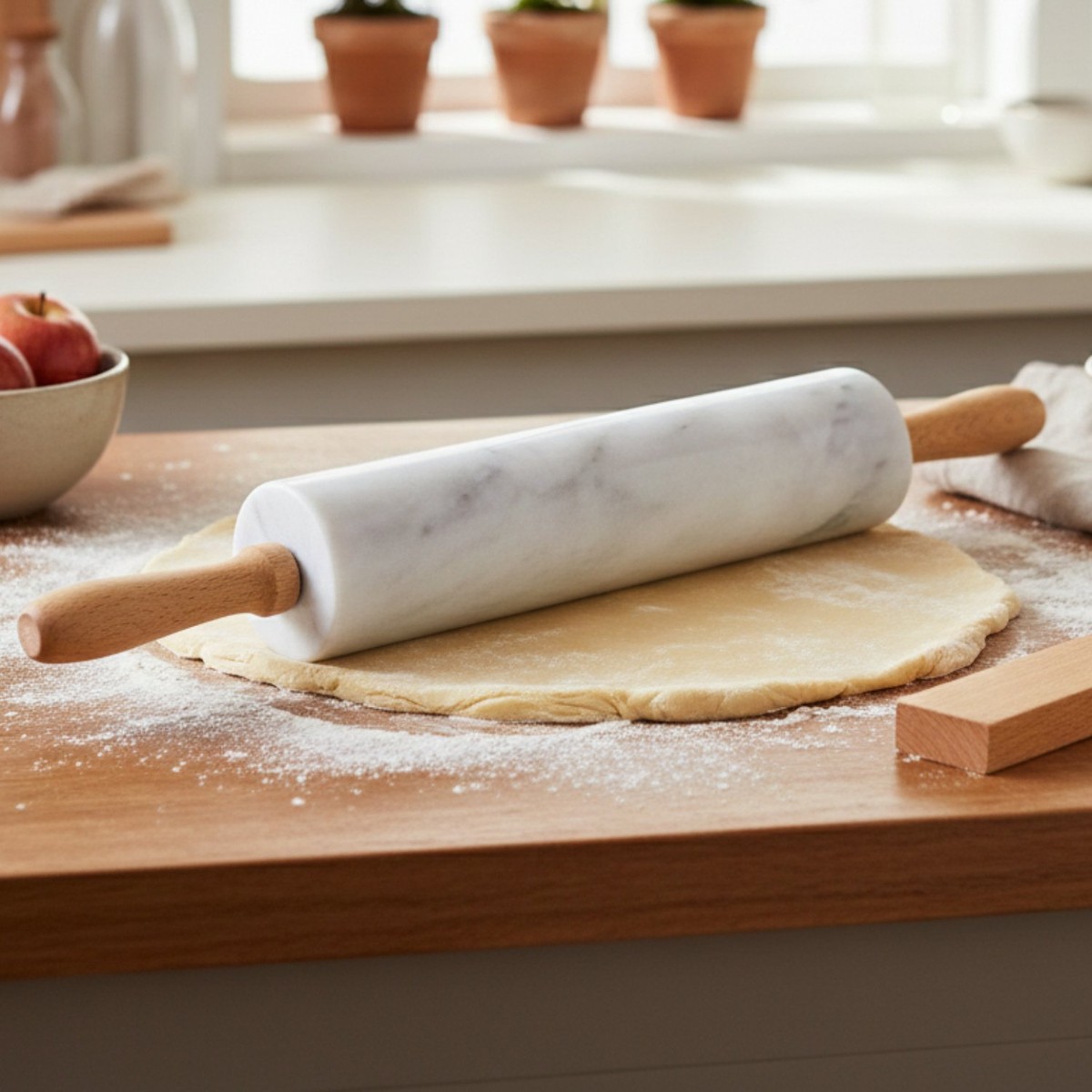
Butter-based pastry doughs are temperature-sensitive - roll them with a warm pin and the butter starts to soften, the dough gets sticky, and the finished texture suffers. A marble rolling pin sidesteps the problem entirely by staying naturally cool, without ever going near a freezer. Here is what makes one worth choosing over a standard wooden pin.
1. Why marble stays cool without chilling
Marble is dense, and dense materials are slow to absorb heat from your hands or a warm kitchen. That is the same property that makes marble popular for pastry slabs - a marble rolling pin brings that cooling effect directly into contact with the dough as you work, instead of only cooling the surface underneath it. Unlike glass or ceramic rolling pins, which are often frozen before use, solid marble works straight off the counter.
What to check:
Confirm the roller itself is solid marble, not a marble-coated or composite core - solid marble is what gives the pin both its cooling effect and its weight.
2. Weight does the work for you
A heavier marble roller needs less downward pressure from your arms to flatten dough evenly, which makes it easier to get a consistent thickness across a full sheet of pastry or dough - particularly useful for anyone rolling large batches or working with stiffer doughs.
3. What we build ours around
Our own Marble Rolling Pin pairs a solid marble roller with ergonomic wooden handles, sized at 16.5 x 2 x 2 inches for a comfortable grip and even control across the full length of a rolling stroke.
LaOnyx Marble Rolling Pin
Solid marble roller, wooden handles · 16.5 x 2 x 2 inches
View the Marble Rolling Pin4. Keeping it in shape
Because marble is porous, the same care rules apply here as with any marble surface: hand wash rather than running it through the dishwasher, dry it fully before putting it away, and avoid letting acidic ingredients like citrus zest or fruit fillings sit against it for long periods. For the full routine, see our marble care guide.
Frequently Asked Questions
Why use a marble rolling pin instead of a wooden one?
Temperature. Marble is naturally cool and holds that temperature well, which keeps butter-based doughs like pastry, pie crust, and cookie dough firm while you roll instead of softening and sticking the way it can under a warmer wooden pin. The added weight of solid marble also does more of the work for you, so you need less pressure to get an even sheet.
Does a marble rolling pin need to be chilled first?
No - that is the main advantage over glass or ceramic rolling pins that are sometimes frozen before use. Solid marble stays cool at normal room temperature because of its density, so it is ready to use straight off the counter without a trip to the fridge or freezer.
What should I check before buying one?
Look at the handle material and the overall length and diameter. Wooden handles (rather than more marble) keep the ends lighter and easier to grip, which matters over a long rolling session. For diameter, a roller in the 2-inch range gives a good balance between rolling power and control for most home pastry work.
How do I care for a marble rolling pin?
Hand wash with warm water and mild soap, then dry it fully before storing - marble is porous, so letting it air-dry wet or sit in standing water can dull the surface over time. Avoid the dishwasher and abrasive scrubbers. For general marble care, see our marble care guide.